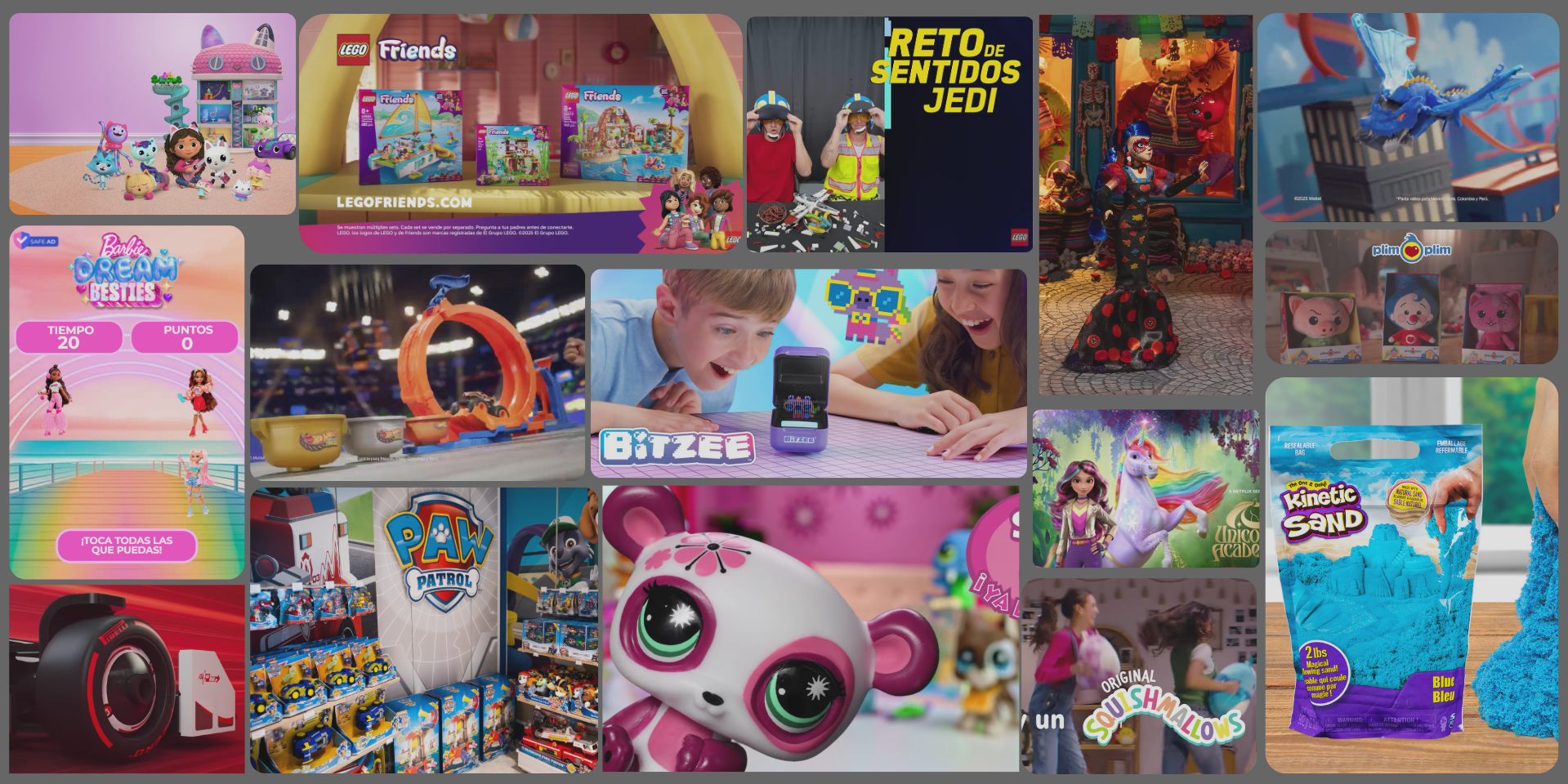
2025 represented a turning point for the toy industry. Advertising costs increased significantly, YouTube rose 45% in Q4 and apps grew 13%. The sector faced pressure to deliver measurable results while reaching increasingly dispersed U18 audiences. Kidscorp assumed a leadership role in transitioning toward a media approach centered on how younger audiences consume, decide, and purchase, rather than adult buying patterns.
Understanding U18 audiences and the toy industry: in Toys, the child decides
Key findings from the Shopper & Brand Tracking Toys 2024 study revealed a fundamental truth about purchase decisions in the category:
- Only 11% of purchases were decided solely by parents.
- 100% of children expressed satisfaction with the toys they received.
"The true spending decision-maker is the child. Desire, characters, and constant exposure drive the purchase."
The open ecosystem problem vs. the Kidscorp model
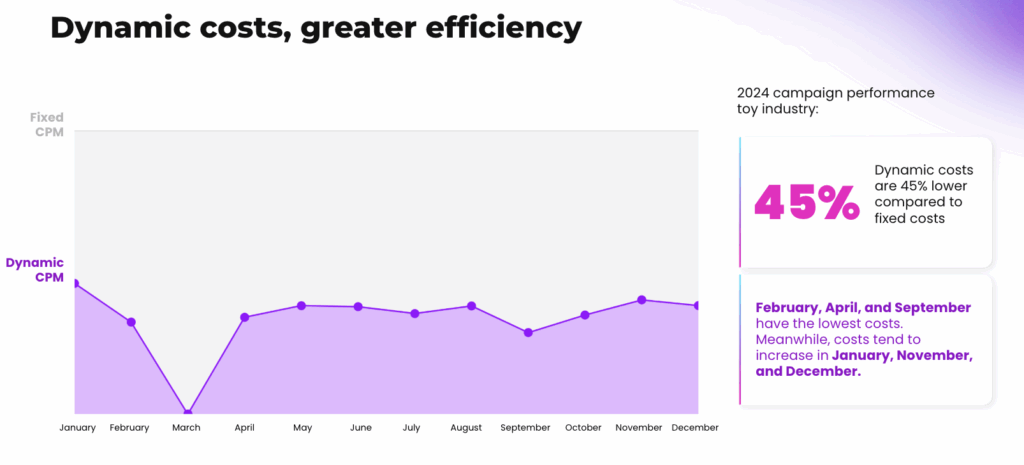
Effectiveness testing on open platforms revealed significant challenges for U18 marketing: substantial waste, elevated CPMs, and limited genuine visibility. Open ecosystems lack segmentation capabilities specifically designed for minors, explaining why toy category brands pay double for equivalent reach through fixed-buy models.
The Kidscorp DSP was built specifically for under-18 audiences, with dynamic pricing and real-time optimization that adjusts impressions based on environment quality, U18 behavior, demand moments, and category benchmarks.
- High investment waste
- CPM inflated by general demand
- Low real U18 visibility
- Reactive buying tied to seasonal peaks
- Direct impact on real decision-makers
- Stable, controlled pricing
- Year-round always-on strategy
- Greater U18 reach with identical budget
Access to 200K apps and 200K YouTube channels, reaching 70% of the connected U18 population in Mexico.
Results that redefine benchmarks
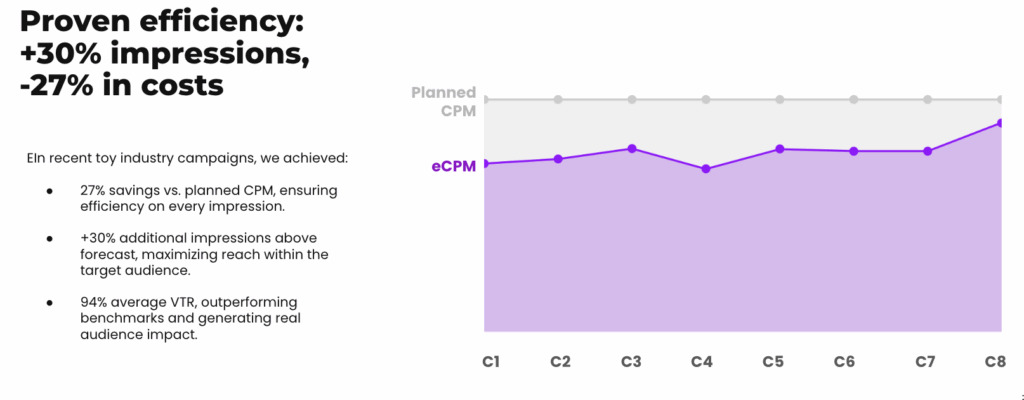
2025 toy industry campaigns using the dynamic model achieved results that set a new standard for the category:
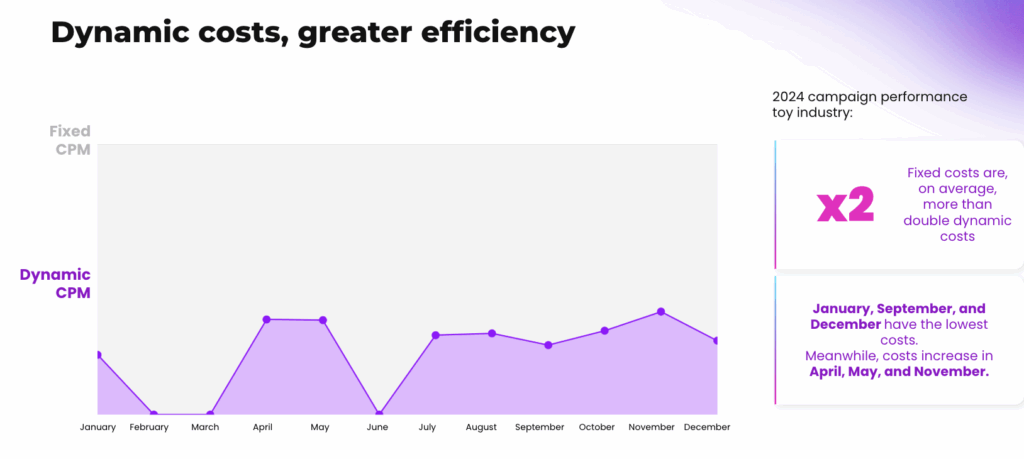
Seasonality analysis demonstrated the stability of dynamic pricing:
- 45% lower costs on YouTube compared to fixed-buy models
- Up to 2x higher efficiency on apps
- Protection against demand spikes in Q1 and Q4
- Sustainable always-on strategy, independent of seasonality
- Higher volume in real U18 inventory
- Investment protection during critical category moments
What this really means for the industry
Efficiency here is an enabler, not the final objective. In industries where children drive purchasing decisions, the dynamic model makes possible what fixed models never could:
-
01
More exposure at the moment desire is created: Children request products they encounter. Without brand presence during discovery moments, YouTube, apps, games, character content, brands lack mindshare.
-
02
Greater Share of Attention (SOA) in a fragmented ecosystem: Savings redirect into child-focused inventory, creating sustained presence and increasing brand consideration likelihood.
-
03
Incremental awareness: The 30% additional impression increase translates to greater reach, stronger top-of-mind presence, and enhanced recall among U18 audiences.
-
04
Continuous brand building (true Always On): Dynamic pricing enables year-round presence previously unaffordable, extending presence beyond seasonal peaks.
-
05
Natural engagement through relevant and safe content: Child-designed inventory reduces waste while increasing completed views, interaction, and genuine content connection.
"Investing in U18 with precision reduces waste and multiplies the real value of every dollar spent."
Conclusion: efficiency as a competitive advantage
Efficiency in child-driven markets means establishing presence where desire originates. Kidscorp redefines efficiency as a comprehensive strategy incorporating data, behavior, technology, and a deep understanding of the child journey.
The approach transforms toy brand growth by building authentic, sustained relevance among U18 audiences, not simply optimizing budgets. When children are the real decision-makers, being present at the right moment, in the right environment, at the right cost isn't just efficient. It's the only strategy that works.